
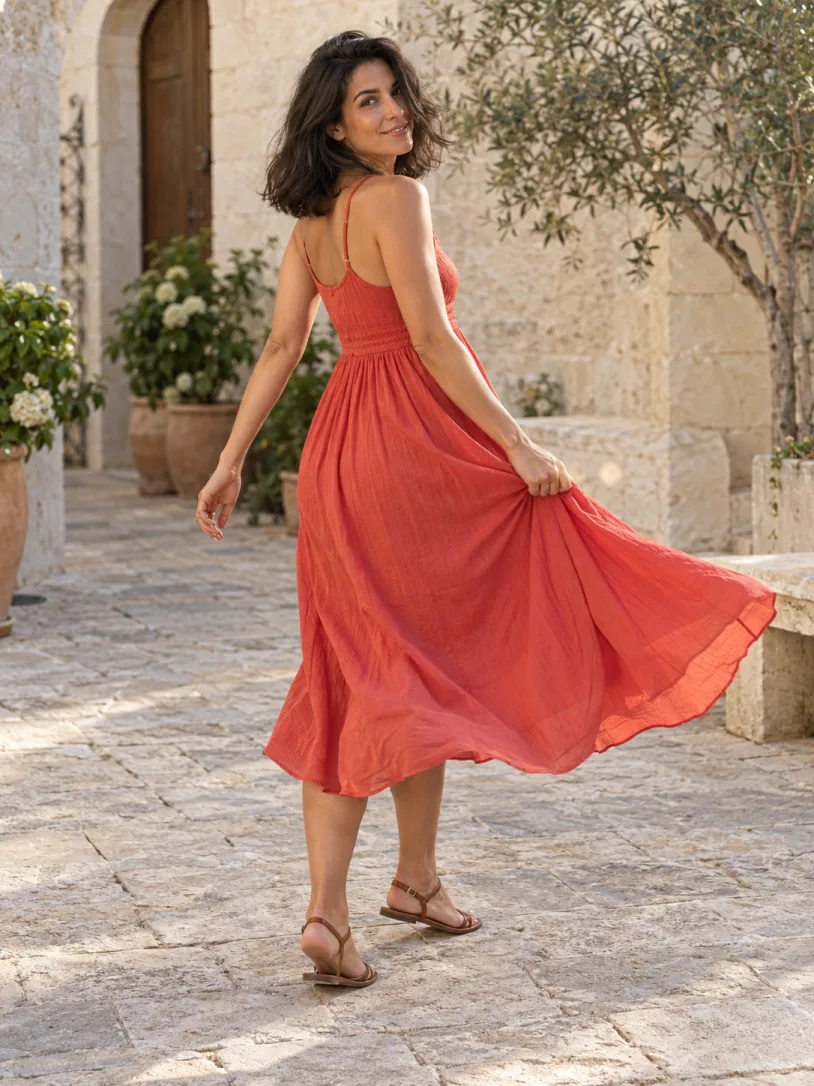
Start with weight, not hands
Choose one supporting leg first. Let the other knee soften, step back, or point away. Once the center of gravity is clear, the shoulders and hands usually become easier to place.
Turn the body before the face
A small three-quarter turn creates depth without forcing a dramatic pose. Set the hips and shoulders, then bring the eyes back toward the camera. This keeps the neck relaxed and the expression believable.
Give each hand one simple task
Touch hair lightly, hold a lapel, rest on a chair, or leave the arm long. Avoid asking both hands to perform unrelated gestures. Light contact reads better than gripping.
Match camera height to the pose
Waist height often works for full-body poses because it preserves leg length. Eye level suits portraits. If you shoot lower, keep vertical lines under control and leave room around shoes and moving fabric.
Photograph the transition
Ask for a slow turn, a small step, or a breath out. Take several frames while the person moves into the pose. The transition often feels more natural than the held endpoint.
PoseDuo makes these directions visible in the camera, so the person being photographed does not have to translate a stream of verbal instructions.
Coming soon on the App Store